'F for Fake', Orson Welles' final theatrical film, was originally touted under a number of names, one of which was '?'. In a way, this working title seems more appropriate, as it's a film that defies description and one that poses many more questions than answers.
On a simple level it can be viewed as a documentary about Elmyr de Hory, a forger who claims to have had over 60 names and been responsible for works of art attributed to Picasso, Matisse and Modigiliani among others. He boldly claims that one museum has 22 post-impressionist fakes that it still believes to be genuine. More accurately 'F for Fake' might be described as a 'film essay' on the issue of forgery and fakery. Can a forgery be a work of art? Are forgers artists, Welles seems to be asking? (It's a debate that Abbas Kiarostami's otherwise beguiling 'Certified Copy' pursues to the point of infuriation).
As well as interviews with Elmyr and footage of the 'artist' at work, much of our knowledge (and I'm tempted to put even that word in inverted commas, because nothing in this film is at it seems) of Elymr comes through his biographer, Cliff Irving. And this is where it starts to get really complicated... Irving is also featured in the film and is himself a notorious con artist - imprisoned for faking an autobiography of Howard Hughes, which he claimed the recluse dictated to him. Yes, the same Howard Hughes Welles himself satirised in 'CitizenKane'... Still with me? At this point you may be forgiven for wondering whether these two characters aren't Welles' own fictitious inventions in this Russian doll of a movie.
'For F Fake' is also a deeply personal film with strong autobiographical elements (Welles' mistress Oja Kodar features prominently). Welles draws parallels with his own fakery, particularly his infamous 1939 take on H.G Wells' 'War of The Worlds', a mock news broadcast that sent hundreds of Americans fleeing from their homes in panic. Of course, Welles wasn't sent to prison for his hoax. He was sent to Hollywood.
And cinema is nothing if the not the art of illusion, and Hollywood the biggest magic store in town. Perhaps to accentuate the point Welles adopts the role a conjurer throughout the film, amusing a child with a magic trick in the pre-title sequence, making a key disappear. Playfully winking to the camera he explicitly says the key isn't symbolic of anything. But is he simply playing games with us again? Is this short sequence perhaps the 'key' to the movie? Are we, the audience, the child he is toying with? When he proclaims "I'm a charlatan, I used to be a magician" he's clearly poking fun at himself but is he making a wider point to his critics? It's no coincidence that 'F for Fake' was made in the aftermath of Pauline Kael's essay 'Raising Kane', a savage attack on Welles that questioned his authorship of 'Citizen Kane', the film that made his reputation, a reputation that Welles spent the following 40 years trying, and failing, to live up to. David Thomson, from whom the title of this 'essay' is lifted, sees 'F For Fake' as both an admission of fakery and a riposte, it is 'the hand behind the back, the droll retort and alibi, that yes, my dear, but you only guessed the half of it'. The films is certainly an attack on the idea of the 'expert'; the art critics who can't tell a forgery from a masterpiece, and, of course, the film critic. Welles also seems to be asking whether the issue of 'authorship' even matters when it comes to art, citing the example of the Chartres cathedral. Its artistic value isn't diminished because of our uncertainty over who created it.
Characteristically, but confusingly, Welles denounced his admissions of fakery after the film came out. "I said I was a charlatan but I didn't mean it. I was faking even then. Everything was a lie."
So, smoke and mirrors to the end. Vérités ou mensonges? I'm not sure that it matters. Don't come looking for answers. This isn't that kind of movie.
'F for Fake' will be re-released in UK cinemas from 24th August.
David Thomson 'Rosebud: The Story of Orson Welles' Abacus 1996.
Ok, first up, I must confess that I haven't seen the actual winner of the 1930 best picture Oscar, 'Broadway Melody' - yet I find it hard to believe, in terms of sheer spectacle, it competes with this remarkable film.
Released in the Soviet Union in January 1929 , director 'Vertov' (actually Denis Kaufman) described his film as, 'an experiment in the cinematic communication of visible events, without the aid of intertitles, scenario, sets and actors.' Ok... A documentary, then?
Of sorts, Vertov/Kaufman was a spearhead of the 'Kino eye' group, a movement that sought to present Russian life to the Russian people; and 'Man With A Movie Camera' is essentially a day in the life of a Russian city. But this is no mere travelog, Vertov deploys many cinematic tricks - slow motion, speeded up film, split screens, still photography, creating, in his own words, 'a truly international absolute language of cinema based on its total separation from the language of theatre and literature.'
Of course, there is a dichotomy at work here - between Vertov's artistic instincts and a fidelity to the subject matter. And yes, there are moments where it feels like a soviet propaganda piece (particularly during a rather feshitistic montage of soviet athletes in stylised poses), but to me the film says something of the universality of the modern age - the dizzying rush of modernity. Vertov presents us with towering skyscrapers, giant cranes, billboards for mineral water, glamorous storefront mannequins, biplanes, a steam train hurtling out of control... Motion itself seems to be the common denominator (indeed, the pseudonym 'Dziga Vertov' actually means spinning top): whirring pistons, revolving doors, ringing cash registers, ambulances, fire engines, a speedway, a children's carousel at a fairground, a smith's wheel shartpening an axe, a shoeshine boy vigorously polishing, the darting hands of switchboard operators, secretaries pummelling typewriters, and the whirring of the film camera.
There are moments of poetry too, particularly in the juxtaposition of images as day breaks in the city: trees swaying in the wind in a deserted city park, a tramp asleep on a park bench, a crouched telephone waiting to ring, a woman stirring from her bed, dressing and washing her face. All life is here: childbirth, funeral processions, a registrar dealing with a marriage, then a divorce... All captured by the roving eye and clicking shutter of 'the man with a movie camera' - himself a visible presence in the film, his camera at times positioned high amongst the streetlights, foreshadowing the mass surveillance of our own, more sinister, modern age.
As we hurtle headlong towards awards season, and specifically the 84th Academy Awards on February 26th, I find myself more interested than usual in predictions for the best picture 'Oscar'. There's been a lot of talk this year about Michel Hazanavicius' 'The Artist' and how it could be the first silent film to pick up the coveted award since 'Wings' in 1929 - the very first year the Oscars were awarded. It stands a good chance, not only because it is a very good film but because it's a film about the movies - which Hollywood tends to love, self-congratulatory whore that it is (yet 'Singing in the Rain' wasn't even nominated - hmm, go figure...).
Best picture and very good films don't always go hand in hand: 'Terms of Endearment' and 'Chariots of Fire' spring immediately to my mind. Every critic has their own opinion of what should have won, right? (If I had a dime for every time I've read that 'Raging Bull' should have won over 'Ordinary people' in 1980 I'd have more money than... than Robert Redford & Martin Scorscese put together. Almost).
Well, this critic is no different. Hence this intended series, 'The Alternative Oscars'. There is one twist, I suppose. Rather than discuss current films I want to go right back to the beginning and use this as an excuse to explore early Hollywood - working my way forward through the decades.
A few words by way of explanation. I have restricted myself to films that could have been eligible in terms of when they were released for each given year, although some liberties have been taken with where they were released (it was often the case that foreign films weren't given a U.S release until years later - where this is the case I have used the release date in the country of origin).
The first academy awards were held on May 16th 1929 for films released between August 1927 and July 1928. But there was no 'best picture' award' that year; 'Wings' won what was then called the 'outstanding picture' award. Yet for the only time in the academy's history an alternative 'Oscar' was awarded for 'best unique and artistic production' (clumsy, I know). That award went to F.W Murnau's 'Sunrise'. My subsqeuent entries then are suggestions of films that could have won that alternative Oscar, had the Academy continued with it.
EDIT 15/3/13 A couple more caveats. As I quite clearly stalled in 1931 I've decided to publish the full list from 1929-1951 on my home page and link pages to the list. This way I don't have to write about every single film in the list in chronological order and this will hopefully breathe new life into the idea... I've also decided, for the sake of variety, to allow myself only one film by any given director, otherwise this will be a Hitchcock and Powell & Pressburger list!
1929 'Sunrise' (Director F.W Murnau)
Murnau was a leading figure of German Expressionism who made his name in 1922 with 'Nosferatu', the first Dracula movie (renamed for reasons of copyright). Murnau moved to Hollywood to further his career and 'Sunrise' was the first product of that move. As David Thomson has observed it is 'a strange combination of German talent and American material'. On a technical level it is an extraordinary film bearing the hallmarks of those early German masters: dazzling montages, long tracking shots, dissolves, flash-backs, flash-forwards, dream sequences etc. Yet the story is deliberately simple - as the preface explains, 'this song of the Man and his Wife is of no place and very place; you might hear it anywhere, at any time.' A simple farmer, known only as 'The Man' (George O'Brien) is seduced by 'The Woman from City' (Margaret Livingstone) who, in the heat of passion, persuades him to murder his wife (Janet Gaynor) and run away with her to the city.
A film noir then? Not quite, although it pre-empts that genre in many ways. 'The man' cannot bring himself to commit the crime at the last moment. The wife flees, and the man pursues, full of remorse. Ironically they find themselves in the city as the man attempts to regain her trust. She forgives him (surprisingly quickly for an attempted murder) and the film shifts gear, romantically depicting the simple, rural couple's bewildered excitement in the metropolis. I use the word metropolis deliberately as Murnau's depiction of the city is every bit as dazzling as that of contemporary/compatriot Fritz Lang's science-fiction movie 'Metropolis', released the same year. Yet this is no mere marvel of technique, there is an emotional core to the film and Murnau's brilliance lies not just in grand set pieces but in finding poetry in everyday reality.
Their return home is perilous, and again ironically, the wife nearly drowns in the very same lake as the murder was attempted. She has only survived by clinging to the same reeds with which the man had planned to make his escape. Near death, she awakens to see the man by her bedside and their kiss dissolves into the sunrise, heralding a new start for them both.
1927 was a sunrise for the film industry as a whole in many ways, heralding the arrival of sound and the first talking picture, 'The Jazz Singer'. The industry would never be the same again and pictures like 'Sunrise' would swiftly become a thing of the past. It's a shame really, as this critic would prefer to think of 1927 as the year of arguably the greatest silent movie of them all.
So, R.E.M have come to a seemingly definite end this week with a career spanning retrospective, 'Part Lies, Part Heart, Part Truth, Part Garbage.'
News of their split some two months ago prompted a variety of responses from regret to zeal to the predictable 'I thought they'd split up ages ago'. For this fan, it was akin to hearing of an old girlfriend: one I'd given very little thought to in recent years but hearing of their passing transported me back to a time when they meant the world to me.
To understand my relationship with REM you would need to understand what they meant to certain music fans in the 80s. I'm not talking about REM as the U2-sized behemoth that 'Automatic' created. I make no bones about being primarily a fan of their early albums. For the best part of a decade they were the ultimate cult band. The best band in the world that most people hadn't heard of.
I remember very well the first time I encountered their music. Growing up in a decaying ex-mining town, cultural hotspots were few and and far between. Coalville Library was a typical municipal library in the 80s (and still is, probably): staffed by harassed middle-aged librarians, populated by the jobless and retired - all killing time. Yet its music section was a haven for many an aspiring young aesthete such as myself. The local record store, 'What Records', was fine but we couldn't afford to buy much. Like thousands of teenagers across the country at that time, our illegal downloading was borrowing LPs and home-taping. There wasn't much of a community spirit amongst us 'cool' kids that frequented the library. At best we might exchange respectful knowing looks across the LP racks. Anyway, one particular day in 1988 or 89 at said library, I found myself hypnotised by Bill Berry's eyes (and magnificent monobrow), staring back at me from a mysterious sepia tinged album cover.
I'd come across the name REM in the music press, but in those days I was primarily a Sounds or Kerrang reader, dipping into NME and Melody Maker on occasion. I knew nothing about them, just that they were revered by certain scribes. Everything about this LP intrigued me - the cover, the title, the mysterious band name, the curious song titles (Swan Swan H, Cuyahoga, The Flowers of Guatemala etc), the lack of band pictures or even full band member names - just Berry/Buck/Mills/Stipe songwriting credits. No lyric sheet, just what I later realised were bizarre lyric fragments on the back cover - "I found it. Miles Standish proud" ???
The first few plays didn't furnish many answers. There were more questions in fact - 'What on earth is he singing about?', 'Why is the track listing out of order?', 'What's this hidden track?' etc Yet, I was hooked. In many ways, 'Pageant' was the perfect introduction to REM for me. Coalville was very much a METAL town and I liked guitars - unashamedly. I'd dipped my toe into 'indie', but found the Smiths, Joy Division and most of the English alternative bands a little too fey. This was alternative rock that rocked. From the crunching opening riffs of 'Begin the Begin' and 'These Days' I knew I'd found my new favourite band. Of course, it was melodic and thought-provoking too, and 'Fall On Me' (below) remains one of my favourite ever songs.
Tracking back from 'Pageant', the off-kilter Americana of their first two albums 'Murmur' and 'Reckoning' was revelatory to me (still struggle with 'Fables of the Reconstruction' though). This was REM at their most enigmatic. And cool. Listening back to their albums the last few weeks, 'Reckoning' now stands out as my favourite over the more lauded debut: Harborcoat, Seven Chinese Brothers, So. Central Rain, Camera, Time after Time, Letter Never Sent (below). Brilliant. I don't think I ever wanted to be in a band as much as I did watching the short film 'Left of Reckoning' back in the day. And they were a band in the true sense of the word. Four friends who'd grown up in the same small town aspiring to do something creative but ultimately happy to be working in the local record store. This was definitely something I could relate to (and spent most of my life adhering to, come to think of it). To return to the girlfriend analogy, I was very much in love with this REM. That romantic love that characterises the beginning of a relationship where the world seems full of possibilities and wonder.
The later IRS albums are less magical more... direct and politicized. As admirable and polished as their final 'indie' album 'Document' is, in retrospect, it was a more difficult album to love. They'd lost a little of their mystique. This had become a serious relationship and there was something cold about this current phase. Many long-standing fans point to their major label debut 'Green' as the beginning of the end. Yet these were still exciting times to be a REM fan. 'Green' was the first 'new' album they'd released since I'd become a fan and there was more than enough of the old REM here to attract me. Yes, they were making more obvious inroads towards mainstream respectability in songs like 'Stand' and 'Pop Song 89'. And yes printing the lyrics to 'World Leader Pretend' heralded the beginning of a new openness on Stipe's part. But he remained an enigma, manicly miming through a megaphone during 'Orange Crush' on their Top of the Pops debut, never looking cooler than in the (gloriously dumb) 'Stand' video. I'm quite proud to admit that this was a look I tried to ape for about 5 years.
It was nearly three years before their next release, 'Out of Time'. The single that heralded this comeback, 'Losing My Religion', was ultimately something of a disappointment to me. The mysterious messianic Stipe had moved much further towards mainstream popstar status. Here was the new Bono - impersonation on 'Stars In Their Eyes' was swiftly to follow. Worse still, he'd cut his hair short. It could be argued that REM's artistic decline can, Samson-like, be charted back to this moment.
'Out of Time' was, I think, the first 'new' album I bought on cd. I mention this because in some ways there are parallels. The problems I have with much of that album are criticisms that were levelled at that still new format: it's too clean, clinical, polished. The self-consciously hip 'Radio Song' typifies this - it has dated very badly. And don't get me started on 'Shiny Happy People'. And yes, I know it's a piss-take! Furthermore, the move towards less oblique lyrics that was begun in earnest on 'World Leader Pretend' was completed here. Songs that made obvious sense, with lyric sheets! How dare they! Didn't Stipe realise that trying to 'divine his deeper motives' was part of the fun? Still the album had moments of loveliness, like 'Half A World Away' and the sublime 'Country Feedback' (below).
The three years between 'Green' and 'Out of Time' had seemed like an eternity to me. And therein lies the real problem, not Stipe's hair or the songs so much. I'd gone from 17 to 20. I'd been to university. I'd discovered jazz. And girls (although they didn't discover me for a while longer...). I'd outgrown REM a little. I guess 'Out of Time' was a little out of time for me, and if my religion wasn't lost, my faith was certainly wavering. Still, I did get my hair cut short...
'Automatic for the People' is where it gets problematic for me. I was still excited by the prospect of a new REM album, but, if I was lukewarm to 'Losing My Religion', I hated Automatic's lead single, 'Drive', with a passion. It seemed so... obvious, so overblown. I didn't buy the album (and I'll confess that I haven't bought an REM album since). Borrowing it off a friend, I taped a copy, sans 'Drive', which made it much more palatable. Again, there were moments of loveliness, primarily 'Find The River', but something had definitely changed for me. These were very explicit songs, compared to the early IRS albums. In writing more direct lyrics much of the mystery had gone from the band. To return to the girlfriend analogy, it was now like seeing her without her make-up on, and not liking what you see... So I moved on. But so did she, with a new look, now courting favour from boys who'd mocked my love just a few years previously. No hard feelings then, on either side.
I spent most of the next two decades working in record shops and heard the subsequent albums as they were released. There were songs I still liked from 'Monster', 'New Adventures' and 'Up'. But it wasn't the same. 'Reveal' and 'Around the Sun' seemed very poor indeed and by this time I'd lost all interest. I'd barely given them a thought in the last few years. As for many, it was only with the news of their demise that I've gone back to those songs and times that I loved.
At the height of my REM mania, a friend of mine produced an REM fanzine where contributors would publish their interpretations of those early songs. One issue gave away a flexi-disc featuring a lost REM classic 'Tainted Obligations', a gorgeous song that seemed to come out of nowhere without explanation, like a gift from the gods. To this day it is one of my favourite songs and I wanted to end this blog with it, as its mystery seemed to encapsulate my feelings towards the band in those early years. Bizarrely, yet somehow appropriately, 'Tainted Obligations' seems to elude internet search engines. Enigmatic to the end then. The one thing I have gleaned is that it isn't an REM song at all, but a Michael Stipe/Michael Sweet collaboration called the Community Trolls. This seems somehow fitting; part lies, part truth, part heart, part garbage indeed.
"What is this thing called love? Just who can solve its mystery, and why should it make a fool of me? ('What is this thing called love?')
The words belong to Cole Porter, but, for me, the song is forever and indelibly Sinatra's. It's featured on the 1955 album In The Wee Small Hours. Sixteen songs that speak of loneliness, longing and loss. Many of them had been recorded before by other singers. But these were definitive versions. Frank wasn't just a singer of standards. He set them.
Somebody once asked me recently, "Is it true that he never wrote a song?"; as if that somehow invalidated his art. It's a question I will answer later in this essay, but I would argue it's a question that could only be asked in the age of the singer-songwriter. We should remember that Sinatra came from a different age. To me there seems an undeniable logic in the creative 'division of labour' that characterised that 'golden age'. Why not have the most suitable individuals responsible for the constituent parts of a song: the melody, the lyric, the arrangement, the performance etc ? The best songwriters do not necessarily the best singers as a cursory listen to the work of Bob Dylan proves. Ironically Dylan himself described Sinatra as 'one of the few singers who sang without a mask' (Mojo #56). It's a sincere tribute, clearly intended to diffuse any performer vs singer-songwriter debate, but for me, 'the mask' is essential to Sinatra's art. His creativity lies not in the writing of the song but in the interpreting of it. The songs are a canvas upon which to paint, a stage upon which to perform.
Roger Gilbert, in an enlightening essay, identifies two 'roles' Sinatra returned to most frequently in his musical repertoire , 'the swinger' and 'the loser', and places those roles within the context of troubled masculinity in the 1950s. Sinatra alternates between these two roles in his recordings for Capitol records in the 1950s (unquestionably his artistic peak) in a quite deliberate fashion. For all his swagger he was willing to bare his soul. As a performer playing to an audience he understood the importance of contrast, of light and shade. Lifting them up and bringing them down. "The roaring traffic's boom, to the silence of my lonely room", as he puts it in a signature song. 'Night and day' indeed.
The 'loser' persona is best displayed on a trilogy of thematically linked 'song suites': In The Wee Small Hours (1958), Where Are You? (1957) and Only the Lonely (1958). Intimate, intense albums of breathtaking beauty, and arguably amongst the greatest recordings of the twentieth century.
In The Wee Small Hours (1955)
There is a sense in which pop music came of age with this 1955 release. Sinatra and his arrangers (in this case Nelson Riddle) were among the first to realise the potential of the 'long playing' format. This would be no mere collection of unrelated singles, as albums had previously been. Through careful song selection they were able to covey a consistent mood, and tell a story of sorts.
The central narrative of In The Wee Small Hours is of 'the loser' alone in his room, brooding over his departed lover. The overall mood is one of longing; as the hours pass he slowly drifts into a dream-like state. In those dreams he is plagued by images of his loved one... ('I see your face before me')
Later, during 'I'll Be Around', 'the loser' deceives himself into believing in the possibility of a reconciliation, lapsing once more into a dream reverie in 'Deep in a dream'. As his cigarette burns down he wakes to confront a lonely reality...
Where Are You? (1957)
Where are you? was the first Sinatra album to be recorded in stereo, and the sound quality is a considerable improvement on the 1955 album. It was also the first Sinatra album to feature arranger Gordon Jenkins , whose lush arrangements inspire a terrific performance from the singer. Witness the way in which Sinatra climbs into the high note at the beginning of the second verse of the title track on the line "...where's my heart?..." In later years, on lesser albums, he would hide behind the orchestra, riding on the conductor's coat tails. Here he soars, taking the strings, and the listener with him.
If the abiding image of the previous album is of 'the loser' alone in his room, "uneasy in my easy chair" as he puts it in 'It Never Entered My Mind', here he takes a tentative step into the outside world. Searching for his lover, "away from the city that hurts and mocks", he covers the waterfront, watching the sea ('I Cover the Waterfront'). In Billie Holiday's earlier recording of the song the prevailing mood is hopeful, the setting romantic - searching for her love she is "covered by a starlit sky above". Here a subtle change in the lyric to 'starless sky' gives the song an altogether darker hue.
The search continues in 'Where is the one?' before the loser appears at last resigned in 'There's No You'. The full realisation of this comes during what is undoubtedly the centrepiece of the album, 'Lonely Town'. Wandering the streets in search of his lover "a million faces pass before (his) eyes", but he is still alone. Vocally it is a tour-de-force, Sinatra squeezes every inch of drama out of the song's dynamics, and every hint of pathos from the final lyric, "unless there's love, the world is an empty place... and every town a lonely town."
Roger Gilbert's essay, 'The Swinger and the Loser', considers Sinatra's 50s recordings, and the projections of masculinity therein, in the light of broader cultural tendencies of the period: Method acting, the Beat poets, Action painting and Hard bop jazz. The first of these strikes a particular chord with me. Lest we forget, Sinatra was a gifted actor. His best cinematic roles in From Here To Eternity, The Man With The Golden Arm and Suddenly allow him to simultaneously demonstrate both the swinger and the loser personae from his musical repertoire. As Gilbert puts it, these overtly masculine roles display the startling capacity for showing pain that lies at the heart of the Sinatra's singing, despite his macho, finger-snapping swagger. The film writer, David Thomson, also notes this interrelationship between singing and acting, describing Sinatra as having a pervasive influence on American acting. "Sinatra is a noir sound, like saxophones, foghorns, gunfire and the quiet weeping of women in the background." (Sorry, I just had to shoehorn that quote in somewhere...)
Whether Sinatra was a method actor is a moot point - he certainly demonstrates some of the traits of method acting within his song roles. 'I'm A Fool To Want You' from Where Are You? is a case in point. Sinatra first recorded the song in 1951 at the beginning of his tempestuous relationship with the love of his life, Ava Gardner. Returning to the song on Where Are You? in 1957, the year of their divorce, Sinatra draws on his own heartbreak to lend absolute conviction to the performance. Legend has it that Sinatra ran from studio after recording the song with tears cascading down his cheeks. The extent to which Sinatra 'got inside' this particular song is evidenced by the co-writing credit the song's original authors afforded him (the only instance of this in his vast back catalogue, I believe).
If, in In The Wee Small Hours, we see Sinatra, the artist, painting in rich autumnal shades, then Where Are You? draws on the deep blues in his pallet. If the final album in this trilogy, Only the Lonely, is to be characterised by a colour then it can only be pitch black. Having followed the loser through longing, and then loneliness, we now join him in despair.
Only the Lonely (1958)
The coverfeatures the singer in full clown make-up, with the suggestion of a tear lining his cheek. This is not simply Sinatra portraying 'the fool' undone by love. This is Sinatra, the performer, whose ostensible role is to 'entertain' us, admitting to a secret pain. It brings to my mind a joke from Alan Moore's Watchmen novel. A man visits a doctor's surgery complaining of feeling all alone in an ever-threatening world. The doctor finds nothing wrong with the man but suggests a visit to circus, as the great clown Pagliacci will surely lift his spirits. The man breaks down in tears. "But doctor, I am Pagliacci..."
A dramatic, sweeping piano ushers in the opening, title track. A deceptively gentle opening verse follows. But something is wrong... The voice, on the previous 'loser' albums still recognisable as the croon that wowed the bobbysoxers in the forties, has changed... Deeper, positively mournful, and pushed to the very front of the mix it has a ghostly, disembodied quality, as if weighed down by the sorrow of a thousand lifetimes. These may have been Songs for Only the Lonely, as the full title promises, but they are certainly not for the faint of heart. Indeed, the album ought to carry some sort of warning sticker as 'easy' listening seems a woefully misleading description.
In 'Lonely Town', on Where are You?, the loser has internalised his pain to such a degree as to be oblivious to all passers by. In Only the Lonely he now sees that pain externalised and reflected in the outside world. As John Collis notes, the preponderance of elemental imagery in the song titles seems to mirror his heightened emotional state: Willlows weep for him ('Willow Weep For Me'), 'Spring Is Here' (but joylessly) and his love has 'Gone With The Wind'.
Retreating from these delusions he seeks sanctuary indoors, finding a new companion in the warm, welcoming arms of alcohol. The scene is a deserted barroom. The loser is slouched on a stool, pouring his heart out to the bartender. To the accompaniment of a soft, shuffling, honky tonk piano he begins...
"It's quarter to three, there's no one in the place, except you and me. So set 'em up Joe, I've got a little story I think you should know..."
The song is, of course, 'One For My Baby'. It, and its companion piece on the album ,'Angel Eyes', represent two of Sinatra's most celebrated performances, and are the two key songs in his portrayal of 'the loser'. Right up until the end of his career he included one or both of these songs in his live act, adopting the 'saloon singer' persona, as he called it, creating scenes of complete intimacy within packed concert halls, turning Madison Square Garden into a backstreet speakeasy for three beautiful minutes.
'Angel Eyes', with its sparse Nelson Riddle arrangement, and slow rhythmic pulse, resounding like the drunk's slowed heartbeat, provides perhaps the album's most dramatic moment. It's no coincidence that Sinatra chose this song, not the recently recorded 'My Way', to close the 'farewell ' concert that began his 'retirement' in 1971. With a typical sense of theatre, the lights dimmed as Sinatra delivered the breathtaking final line, "excuse me, while I disappear...." And he was gone.
Joe's calling last orders for me too.
Dim the lights.
Raise the curtain.
Bring on the clown.
Sinatra & The Art of Losing:
Recommended albums
In The Wee Small Hours (1955) Close to You (1956) Where Are You? (1957) Only The Lonely (1958) No One Cares (1959) Point of No Return (1962) All Alone (1962) The September of My Years (1965) A Man Alone (1967) She Shot Me Down (1982)
Recommended reading
John Collis 'The Complete Guide to the Music of Frank Sinatra' (Omnibus 1998)
Will Friedwald 'Sinatra! The Song Is You' (Scribner Press 1995)
Roger Gilbert 'The Swinger and the Loser: Sinatra, Masculinity, and Fifties Culture'
(from 'Frank Sinatra and Popular Culture' (ed) Leonard Mustazza, Praeger Press 1998)
As a proud beard wearer of over 20 years who has experimented with a variety of styles, this is a topic close to my heart. I have shied away from a conventional ' top 10' as I don't feel such a restrictive format can do justice to the variety of facial hair these inspirational figures sport. In keeping with the loose er.. theme of this blog I have restricted myself to figures in popular culture. Those seeking a more authoritative voice might wish to consult www.beards.org.
Without further ado...
Master-ful
Roger Delgado
Gloriously goateed arch-enemy of Jon Pertwee's Dr Who. The beautiful symmetry of its zebra patterning only add to the villainy. Described by that august institution, The Daily Mail, as 'the look of a Nazi war criminal on the run in Latin America.' Works for me.
Country Music Hall of Fame Part 1 - The Old Guard
Kris Kristofferson
The best beard in country music, by a country mile. Kenny Rogers included. KK is proof that some men just don't look right without a beard (perhaps the mark of a true beardy?).
Country Music Hall of Fame Part 2- Young Guns
Josh T. Pearson
The best beard in alt-country music, by a country mile. Will Oldham included. This is what I want to look like when I grow up.
Country Music Hall of Fame Part 3 - Lifetime Achievement
Merle Haggard
The Hag must get a special mention for showing real longevity and variety in the country facial hair stakes: full beard, goatee with tache, plain goatee, mutton chops, plain tache - Merle has rocked them all and lived to tell the tale.
Nineteenth Century Elegance
Joseph Conrad
A supreme stylist in prose and beards. Somehow managed to combine a Nemo-like nautical ruggedness with a very well tended tache. Special mentions must go to other inspirational C19th novelists and beard rockers – Wilkie Collins, Charles Dickens, Tolstoy, Dostoyevksy, DH Lawrence et al.
Gentlemen, I doth my cap.
Straight, no razor
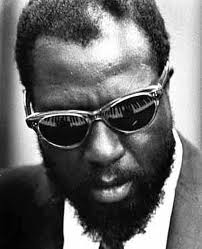
Thelonious Monk
The Monk's moody magnificence more than compensates for a surprising lack of beards amongst jazz greats. He earns bonus points for always setting it off with great shades and even an occasional 'Benny' hat..
Mustachioed Marvels (1)
Clark Gable A rakish pencil tache classic, working in conjunction with a permanently raised eyebrow. Unfortunately even the power of Clark's tache could not disguise his halitosis. Nevertheless, the King of Hollywood was a king of tache wearers.
Mustachioed Marvels (2)
David Crosby A fulsome, walrus-like beast – hinting at dangers within, perhaps also useful when freebasing cocaine
Mustachioed Marvels (3)
Merv Hughes
Handlebar hugeness of Nietzschean proportions from the Aussie fast bowler. Guaranteed to strike fear into the heart of any weak-kneed, clean shaven English batsman.
Mustachioed Marvels (4)
Terry Thomas Classic cad tache that perfectly complimented his gap-toothed lechery.
Could have been contenders... Those who should have stuck with it:
Josh Brolin
No Country for Old men was a wonderful modern take on an old classic. The same might be said of Josh's tache.
Elvis Costello
'Mighty Like a Rose' may have been a career low point according to the critics, but EC's image surely reached a hirsute high point. 'King of America' featured a prototype of this look, where he, in his own words, 'wore it proudly'.
Follicular Faux pas - Those who shouldn't have bothered...
Simon Le Bon
Actually a good beard that suits his once boyish features but the look is totally undermined by excessive use of ‘just for men’. Embrace the grey, Simon!
Jeremy Beadle
The use of a trimmed beard to create an illusory jawline is as old as facial hair iteslf, but this really was a feeble attempt at disguising double chins.
Jonathon Frakes
Commander Riker from Star trek TNG should have left the Nemo look to Nemo and Joseph Conrad. Evil Spock's goatee in parallel universe story 'Mirror mirror' was far more impressive.
James McAvoy
That’s not a beard it's bumfluff. From Shameless to shameful.